A2A/open‑banking rules: cut payment fees and boost cash flow
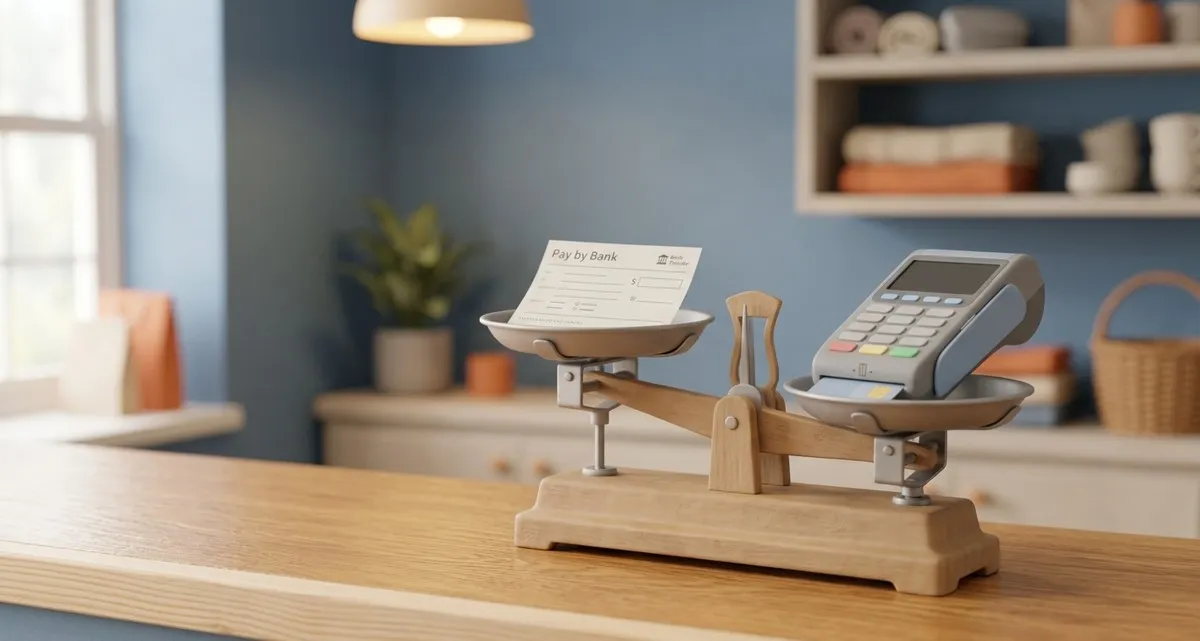
Why the new A2A/open‑banking rules matter to your bottom line
If you run a bakery, a boutique, or a small logistics firm, the way your customers pay can suddenly become a hidden cost driver. The latest European rules for account‑to‑account (A2A) payments – often called “open banking” – are changing fees, settlement speed and fraud risk for Dutch merchants. In plain terms: keep charging only card payments and you may see higher transaction fees, slower cash‑flow and a bigger exposure to charge‑backs. Adding a low‑cost, instant bank‑transfer option such as a “Pay by Bank” solution can protect your margins and keep money moving into your account faster.
What’s changing – the new A2A/open‑banking landscape
Lower fees for direct bank transfers
Under the new regulation, payment service providers (PSPs, the companies that process your online payments) must offer a standardized A2A option – often marketed as “Pay by Bank”. Because the transaction goes straight from the customer’s bank to yours, the intermediary cost is much lower than for card schemes. Many Dutch banks have already integrated this service, meaning the fee per transaction can drop from around 1.5 % for cards to under 0.3 % for A2A.
Faster settlement, but new risk considerations
A2A payments settle in near‑real time – usually within a few seconds – compared with the 1‑2 day lag that card payments often have. That speeds up cash‑flow, which is crucial for businesses that need to restock or pay staff quickly. However, the instant nature also means you must be ready to detect fraudulent attempts right away. The regulation introduces stricter liability rules: merchants share more responsibility for unauthorised transfers unless they have proper fraud‑monitoring in place.
Uniform technical standards
The European “open banking” framework mandates a common API that any Dutch bank can expose. A leading A2A provider offers a white‑label “Pay by Bank” solution that many Dutch banks already support. This means you don’t need a custom integration for each bank – a single gateway can handle most customers’ accounts.
Practical steps to future‑proof your payment mix
- Audit your current fees
Pull the latest statements from your PSP and list the average cost per transaction for cards, iDEAL, and any existing bank‑transfer options. Highlight the difference between “interchange” fees (what the card network charges) and any markup your provider adds.
Step 2: Add an A2A “Pay by Bank” option
-
Add an A2A option
- Choose a reputable A2A gateway that offers the “Pay by Bank” white‑label experience.
- Work with your web‑developer or e‑commerce platform to add the new button next to existing card and iDEAL choices.
- Test the checkout flow on a desktop and a mobile device to ensure the experience feels seamless.
-
Set up fraud monitoring
Because A2A transfers settle instantly, you need real‑time risk checks. Our Security & Protection service can add transaction‑risk rules (e.g., velocity limits, device fingerprinting) that flag suspicious payments before they are completed. -
Monitor performance
After launch, track three key metrics for at least one month:- Average fee per transaction – you should see a drop as A2A usage grows.
- Settlement time – measure the time from payment to cash appearing in your bank account.
- Charge‑back rate – compare pre‑ and post‑implementation numbers to ensure fraud controls are effective.
-
Communicate the new option to customers
A short banner on your checkout page (“Pay instantly with your bank – no extra fees”) can encourage adoption. Most Dutch consumers already trust direct bank payments, so the barrier to try is low.
FAQ
How much can I save with A2A payments?
If your average card fee is 1.5 % and you shift 30 % of transactions to A2A at 0.3 %, you could reduce overall payment costs by roughly 0.36 % of sales. For a €100 000 monthly turnover, that translates to about €360 in savings each month.
Will adding an A2A “Pay by Bank” option slow down my checkout?
No. The “Pay by Bank” flow uses the same API standards that power iDEAL, so the extra step is usually a single click to select the bank, followed by a quick authentication in the bank’s own app or website. Most customers complete the payment in under 30 seconds.
Do I need a new merchant account for A2A payments?
Usually not. The A2A gateway works with your existing merchant account, routing the funds directly from the customer’s bank to yours. You only need to sign a service agreement with the gateway provider.
Keep your payments secure and running smoothly
Adapting to the new A2A/open‑banking rules doesn’t have to be a headache. With the right mix of card payments and instant bank transfers you protect margins, speed up cash‑flow and give customers the flexibility they expect.
At IT Move NL we help small businesses set up and maintain a robust A2A gateway. Our Security & Protection service adds real‑time fraud monitoring, while Maintenance & Support ensures the payment flow stays online and up‑to‑date. Together they let you focus on serving your customers, while we keep the payment engine humming.
Ready to future‑proof your checkout? Get in touch and we’ll walk you through a quick fee audit, add a low‑cost “Pay by Bank” option, and set up the security you need to stay ahead of the curve.
Sources:

He/Him · AWS Certified Solutions Architect | Cloud Engineer @ Essent
Cloud Engineer at Essent B.V. with 10+ years of experience in the tech industry. AWS Certified, passionate about serverless architectures, Infrastructure as Code, and DevOps. Proficient in TypeScript, Python, and Terraform. Based in Amersfoort, Netherlands.
STAY IN THE LOOP
// Cloud, AI & DevOps insights — straight to your inbox.
No spam. Unsubscribe anytime.
// Related articles

Need help with your cloud infrastructure?
Our team of experts is ready to help you navigate the complexities of modern cloud architecture.
Get in Touch