The Single Point of Failure: Why a Power Cut in One City Can Freeze Your Entire Business

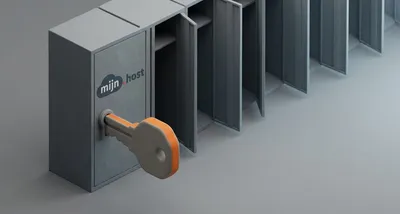
Image generated with AI
This article and its cover image were generated with artificial intelligence (AI).
Imagine you run a busy dental clinic. Your appointments, patient records, and billing are all handled by a modern system that lives “in the cloud.” You don’t have a server humming in the back office; everything is handled by a world-class provider. You feel secure because you are trusting one of the biggest tech companies on earth.
Then, on a Tuesday morning, the screen goes blank. You can’t see who is coming in at 10:00 AM. You can’t process payments. Your staff is standing around, and your patients are getting frustrated.
This isn’t a hypothetical scenario. It happened recently on a massive scale. A power event at a Google Cloud data centre in London caused a ripple effect that froze everything from major financial institutions and delivery networks to government courts.
The lesson here isn’t that Google failed—even the best systems can have a bad day. The lesson is that for many businesses, “the cloud” was a single point of failure.
The cloud is still a building
There is a common misconception that the cloud is a nebulous, invisible entity that exists everywhere at once. In reality, the cloud is just someone else’s computer. Specifically, it is a massive warehouse full of computers (a data centre) located in a specific city.
In this recent event, a power issue hit a specific “zone” in London. Because many businesses have their data and applications stored only in that one London region, they had nowhere else to go when the power went out.
When that specific building in London went dark, the businesses relying on it went dark too. It didn’t matter that the company providing the service was a global giant; if your specific “slice” of their infrastructure is in a building that loses power, your business stops.
Stability vs. Redundancy: The Key to Business Continuity
It is important to understand the difference between a vendor’s stability and your own business’s redundancy.
Stability is the vendor’s promise that their systems are high-quality and rarely break. Google, Amazon, and Microsoft spend billions to ensure their data centres are stable.
Redundancy is your plan for what happens when that stability fails. Redundancy means having a “Plan B” that kicks in automatically. If the London data centre fails, a redundant system would instantly shift your operations to a data centre in another city—perhaps in Belgium or Germany—so your customers never even notice a flicker.
The problem is that redundancy often costs more or requires more complex setup than a basic cloud account. Many small business owners assume that by moving to the cloud, they have automatically achieved redundancy. They haven’t. They have simply traded a local server that might break for a remote server that might lose power.
What this means for your business
You don’t need to be a bank or a national courier to be vulnerable. Consider these examples:
- A bakery using a cloud-based inventory system. If the system goes down, they may not know which ingredients to order, leading to empty shelves.
- A logistics firm with a fleet of vans. If their routing software is tied to a single failing region, drivers are left without directions and deliveries are missed.
If your entire operation depends on one digital doorway, and that doorway is locked, you are out of business until the vendor fixes the problem. You are not in control of your own timeline.
Practical steps for the business owner
You do not need to become a cloud architect to protect yourself, but you do need to ask the right questions. If you have an IT provider or a technical lead, sit them down and ask this specific question:
“If the specific data centre where our services are hosted goes offline tomorrow, what happens to our business, and how long does it take for us to be back online?”
If the answer is “We just have to wait for the provider to fix it,” you have a single point of failure.
To move toward a more resilient setup, look into:
- Multi-region backups: Ensuring your data is copied to a different geographical area.
- Failover strategies: Setting up your systems so that if “Region A” fails, “Region B” takes over automatically.
- Offline contingencies: Having a basic “emergency mode” (like a printed daily schedule or a local backup of critical contacts) that allows you to operate for a few hours without internet access.
FAQ
Does this mean I should stop using a cloud-based system? Not at all. The cloud is incredibly efficient and generally very reliable. The goal isn’t to leave the cloud, but to use it intelligently by not putting all your eggs in one digital basket.
Is redundancy expensive? It can be more expensive than a basic setup, but you have to weigh that cost against the cost of a total shutdown. Losing a full day of revenue and customer trust is usually far more expensive than a more resilient hosting plan.
Can’t I just use a different provider? Switching providers doesn’t solve the problem if you still rely on a single location. Whether you use Google, Amazon, or a local host, the risk is the “single point of failure,” not the name of the company.
Closing the gap in your continuity
There is a significant gap between having a cloud account and having a resilient architecture. Most businesses fall into the first category: they have their tools online, but they haven’t built a safety net.
At IT Move NL, we specialise in Cloud Solutions that move beyond basic hosting. We help business owners identify those dangerous single points of failure and implement the backups and redundancy needed to keep the lights on, even when a data centre halfway across Europe goes dark.
If you aren’t sure where your data actually lives or what would happen if your provider had a “power event,” we can help. We offer continuity audits to map out your digital dependencies and ensure that a power cut in another city doesn’t become a crisis in yours.
Contact us today to secure your business continuity.
Sources:

Reviewed by
David Velarde RoblesHe/Him · Content reviewer · AWS Certified Solutions Architect | Cloud Engineer @ Essent
Cloud Engineer at Essent B.V. with 10+ years of experience in the tech industry. AWS Certified, passionate about serverless architectures, Infrastructure as Code, and DevOps. Proficient in TypeScript, Python, and Terraform. Based in Amersfoort, Netherlands.
STAY IN THE LOOP
// Cloud, AI & DevOps insights — straight to your inbox.
No spam. Unsubscribe anytime.
// Related articles


Need help with your cloud infrastructure?
Our team of experts is ready to help you navigate the complexities of modern cloud architecture.
Get in Touch