Zero‑click email threat: how to protect your small business
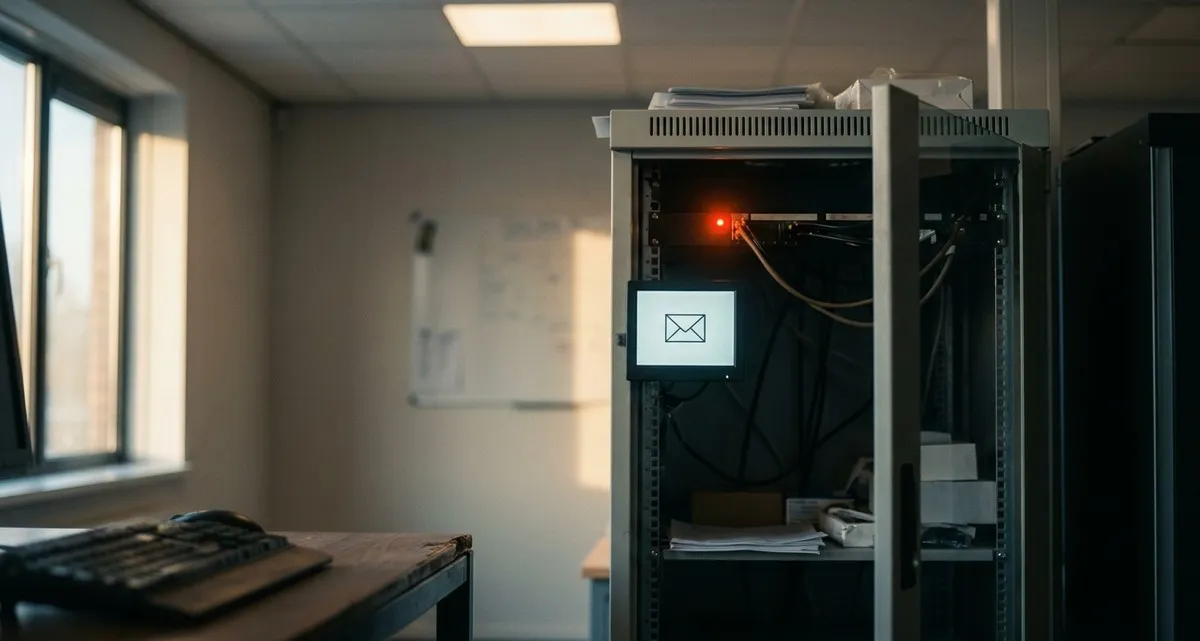
Your inbox could be hacked without you clicking a link – the new zero‑click email threat
Imagine opening your email client in the morning, seeing a perfectly ordinary message, and not even touching it. Yet, somewhere behind the scenes, a hidden flaw in the email server has already let a hacker into your system, stole credentials, and started siphoning data. This is no longer a far‑off scenario. State‑backed attackers are using zero‑click email attacks to compromise businesses without any user interaction. For a small‑business owner, that means a potential shutdown of payroll, orders, or customer data – all because an email was merely displayed.
In the next few minutes we’ll explain what this threat looks
What is the zero‑click email threat and how does it work?
A traditional phishing email tries to trick you into clicking a link or opening an attachment. A zero‑click attack skips that step entirely. The attacker exploits a vulnerability in the email server software itself. When the server receives a maliciously crafted email, the code runs automatically, giving the attacker access to the server or to the mailbox contents—without you ever clicking, downloading, or even opening the message.
The latest campaign, reported by the UK’s National Cyber Security Centre (NCSC), targets a flaw in the Zimbra Collaboration Suite (ZCS) – a common email server used by many small and medium‑sized organisations in Europe. By sending a specially crafted email to a vulnerable ZCS installation, the attackers can:
- Harvest admin credentials
- Read or forward internal emails
- Plant additional malware for later use
All of this happens silently, often unnoticed until the damage is already done.
Why it’s a risk for your business
1. Small businesses are prime targets
Many Dutch small businesses run their own mail servers or use hosted solutions that still rely on ZCS. The cost of keeping every piece of software up‑to‑date can be high, and a missed patch can open the door to a zero‑click exploit.
2. No user interaction required
Because the attack works without a click, typical employee training (“don’t click suspicious links”) offers no protection. Even the most security‑aware staff can be bypassed.
3. Potential cascade effects
If an attacker steals admin credentials, they can impersonate your domain, send fraudulent invoices, or gain access to payroll systems. The financial and reputational impact can be severe for a local bakery, a dental clinic, or a logistics firm with just a handful of vans.
Practical steps you can take today
Below are immediate actions you can implement without waiting for a specialist. Treat them as a short‑term checklist; a more comprehensive security programme should follow.
1. Patch your email server
- What to do: Verify that your Zimbra Collaboration Suite (or any other mail server) is running the latest security patch released by the vendor.
- Why it matters: The NCSC advisory specifically mentions a vulnerability that has already been fixed in recent updates.
- How to check: Log into the server’s admin console, look for “Updates” or “Security patches”, and apply any pending releases.
2. Enable multi‑factor authentication (MFA) for admin accounts
- What to do: Require a second verification step—such as a code sent to a phone—whenever an admin logs into the mail server.
- Why it matters: Even if credentials are stolen, the attacker still needs the second factor to gain access.
- How to set up: Most modern mail platforms have MFA options under “Security” or “Authentication”. If you’re unsure, a quick call to your hosting provider can get it enabled.
3. Harden email authentication (DMARC, DKIM, SPF) (email‑authentication standards that prove a message really comes from your domain)
- What to do: Publish correct DNS records for DMARC, DKIM, and SPF to prove that outgoing mail really comes from your domain.
- Why it matters: These standards make it harder for attackers to spoof your address and use it for further phishing.
- How to set up: Your DNS provider’s control panel usually has a “TXT record” section. Look for guides on “DMARC setup” – the steps are straightforward and many hosting panels include one‑click helpers.
4. Deploy an email‑gateway filter
- What to do: Use a cloud‑based or on‑premises gateway that scans incoming mail for known exploits, suspicious attachments, and malformed headers.
- Why it matters: The gateway can drop malicious messages before they ever reach your server, adding a safety net even if a vulnerability remains.
- How to choose: Look for a solution that offers “zero‑day protection” and does not lock you into a specific vendor. Your IT partner can help you select and configure it.
5. Back up mail data regularly
- What to do: Schedule daily or weekly backups of all mailboxes and server configurations.
- Why it matters: If an attack succeeds, a clean backup lets you restore operations quickly without paying a ransom.
- How to do it: Many hosting platforms include automated backup options; otherwise, a simple script that copies the mail store to a secure cloud bucket works well.
6. Monitor for unusual activity
- What to do: Enable logging of admin logins, failed login attempts, and configuration changes. Review these logs weekly.
- Why it matters: Early detection of a compromised admin account can stop an attacker before they cause major damage.
- How to set up: Most mail servers have a “Log” or “Audit” section. Export the logs to a central monitoring tool or ask your IT provider to set up alerts.
FAQ: zero‑click email threat for small businesses
Q: I use a third‑party email service (e.g., Microsoft 365). Do I still need to worry?
A: While the current zero‑click campaign targets Zimbra, the principle applies to any platform with unpatched vulnerabilities. Keep your service updated and enable MFA for all admin accounts.
Q: My staff are already trained not to click suspicious links. Does that help?
A: It helps against classic phishing, but zero‑click attacks bypass user interaction entirely. Combine user training with the technical safeguards listed above.
Q: How often should I check for patches?
A: At least once a month, or immediately after you receive a security advisory from the vendor or the NCSC.
Closing: how IT Move NL can help protect your inbox
Zero‑click attacks show that even routine email can become a hidden danger. At IT Move NL we work with you to keep your inbox safe without the tech‑headache. We offer:
- Email‑gateway hardening – we configure a robust filtering layer that blocks malicious messages before they reach your server.
- Phishing‑simulation and training – while zero‑click attacks don’t need clicks, many attacks still do; keeping your team sharp adds another layer of safety.
- 24/7 monitoring and alerting – our team watches for unusual login patterns, failed admin attempts, and server anomalies, so you’re warned before an incident escalates.
- Patch management and backup strategy – we ensure your mail server (including Zimbra) stays up‑to‑date and that you have reliable, tested backups.
Think of us as the friend you call when technology starts to feel like a problem you can’t solve yourself. Let’s make sure your inbox stays a safe place for orders, appointments, and payroll – without you having to worry about invisible attackers.
Ready to secure your email today? Get in touch with IT Move NL and we’ll walk you through a tailored protection plan that fits your budget and your business needs.
Sources:

He/Him · AWS Certified Solutions Architect | Cloud Engineer @ Essent
Cloud Engineer at Essent B.V. with 10+ years of experience in the tech industry. AWS Certified, passionate about serverless architectures, Infrastructure as Code, and DevOps. Proficient in TypeScript, Python, and Terraform. Based in Amersfoort, Netherlands.
STAY IN THE LOOP
// Cloud, AI & DevOps insights — straight to your inbox.
No spam. Unsubscribe anytime.
// Related articles

Need help with your cloud infrastructure?
Our team of experts is ready to help you navigate the complexities of modern cloud architecture.
Get in Touch