Is Your Business Hardware at Risk? The New 'Y2K' Time Bug

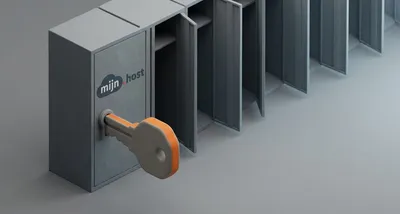
Image generated with AI
This article and its cover image were generated with artificial intelligence (AI).
You probably remember the anxiety of the late nineties. The world was terrified that when the clock struck midnight on January 1, 2000, computers would forget what year it was and everything from banking systems to power grids would simply stop working. This was the Y2K bug. For most of us, it passed without a hitch, but only because thousands of technicians spent years quietly updating old systems before the deadline.
Right now, a similar situation is unfolding with how the world keeps time, and it carries a very real risk for small business owners.
The global body that sets time standards has recently decided to stop using “leap seconds”—those tiny, one-second adjustments added occasionally to keep our clocks in sync with the Earth’s rotation. While a single second seems irrelevant, the way this change is handled could turn some of your business hardware into expensive paperweights.
Why a time error can disconnect your business hardware
In a perfect world, every device in your business—your laptop, your security cameras, your payment terminals—agrees on exactly what time it is. This isn’t just about knowing when to start a meeting; it is fundamental to how the internet works.
To stay secure, devices use something called digital certificates. Think of a digital certificate as a high-tech ID card. When your office camera connects to your network, or your point-of-sale system talks to a bank, they exchange these certificates to prove they are who they say they are.
These “ID cards” have a very strict expiration date and a “not before” date. If a device’s internal clock is wrong—even by a tiny amount—the network might decide the certificate is invalid. It’s like trying to enter a building with an ID card that says it was issued in the future; the security guard (or in this case, the server) will simply block you.
The risk of old, unpatchable hardware (Technical Debt)
For most of your modern equipment, this won’t be an issue. Your smartphone or a new laptop will receive a software update in the background, and the change will happen invisibly.
The risk lies in your “legacy” hardware—the older devices that you’ve kept because they still work. This is what we call technical debt. Technical debt happens when you save money in the short term by not upgrading a system, but you “pay interest” on that decision through increased risk.
Imagine a logistics company using ten-year-old sensors in their warehouse, or a dental clinic with an old security system installed by a company that no longer exists. These devices often run on very simple software that cannot be updated. They are “unpatchable.”
If these devices cannot handle the shift in how time is managed, they may lose their ability to synchronize. Once they lose sync, their digital certificates fail, and they are kicked off the network. They don’t just “glitch”—they stop communicating entirely.
“If it isn’t broken, don’t fix it” is a dangerous strategy
Many business owners follow the rule of only replacing technology when it physically breaks. In the world of software and connectivity, that is a dangerous gamble.
Hardware doesn’t just fail because a wire snaps or a screen cracks; it fails when the world around it changes. Whether it is a new security standard, a change in how the internet routes traffic, or a global shift in timekeeping, your hardware is only as useful as its ability to stay compatible with the rest of the world.
If a device cannot be updated, it is no longer an asset; it is a liability. It is a ticking clock waiting for a global event to turn it into a brick.
FAQ
Will my Windows or Mac computer stop working? No. Standard computers and servers are updated automatically by the manufacturers. As long as you keep your operating system up to date, your main computers are safe.
Which devices are most at risk? The highest risk is in “Internet of Things” (IoT) devices. This includes old security cameras, smart thermostats, old credit card terminals, and industrial sensors—essentially any device that connects to the internet but doesn’t have a screen or a clear way to install updates.
How do I know if my hardware is “unpatchable”? If you don’t know how to update the software (firmware) on a device, or if the manufacturer has stopped releasing updates for that model, it is likely unpatchable.
Protect your business from the invisible clock
The most frustrating part of technical debt is that it is invisible until the moment it causes a crisis. You don’t know your security camera is a liability until the day it suddenly stops recording because it can no longer “prove” its identity to your router.
The only way to manage this risk is through a proper audit. You need to know exactly what is plugged into your network, how old it is, and whether it can still be patched.
At IT Move NL, we help business owners clear their technical debt before it becomes a disaster. Our Maintenance & Support services include comprehensive hardware audits where we identify the “bricks in waiting”—those legacy devices that are too old to be updated and pose a risk to your operations. We can help you map out a realistic replacement plan so you can move forward with confidence, knowing your business won’t stop just because the world changed its clock.
Sources:

Reviewed by
David Velarde RoblesHe/Him · Content reviewer · AWS Certified Solutions Architect | Cloud Engineer @ Essent
Cloud Engineer at Essent B.V. with 10+ years of experience in the tech industry. AWS Certified, passionate about serverless architectures, Infrastructure as Code, and DevOps. Proficient in TypeScript, Python, and Terraform. Based in Amersfoort, Netherlands.
STAY IN THE LOOP
// Cloud, AI & DevOps insights — straight to your inbox.
No spam. Unsubscribe anytime.
// Related articles


Need help with your cloud infrastructure?
Our team of experts is ready to help you navigate the complexities of modern cloud architecture.
Get in Touch