Your employees use unapproved software: The hidden risks of Shadow IT

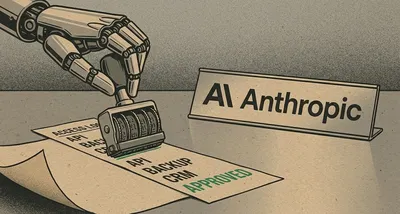
Image generated with AI
This article and its cover image were generated with artificial intelligence (AI).
Imagine a member of your team finds a new, free app that promises to organize your client lists better than the system you currently use. They don’t tell you—not because they are hiding something, but because they want to be more efficient and didn’t think it was a big deal. They start uploading customer names, emails, and phone numbers to this new tool to “get ahead” of their workload.
On the surface, this looks like a proactive employee. In reality, they have just created a legal and security hole in your business that you cannot see, and that you are legally responsible for.
The convenience trap and Shadow IT
Shadow IT is simply the use of software, devices, or cloud services within a business without the knowledge or approval of the person in charge.
It usually happens because of the “convenience trap.” Modern software is incredibly easy to sign up for. With just a Gmail account and a credit card (or a free trial), an employee can deploy a powerful project management tool, a file-sharing site, or an AI chatbot in thirty seconds.
For a small business owner, this feels like a win: your team is finding ways to work faster. But the danger isn’t the software itself; it’s the lack of oversight. When data leaves your managed systems and enters an unapproved third-party platform, you lose control over:
- Where the data is stored: Is it on a server in a country with weak privacy laws?
- Who can see it: Does the software provider have the right to use your data to train their own AI?
Consider a small logistics company with a handful of vans. A dispatcher might start using a free, unapproved online map tool to share delivery routes with drivers, uploading customer addresses and contact details to make the process faster. If that tool suffers a data breach, the customers won’t blame the app—they will blame the logistics company. And the data regulator will hold the business owner accountable.
A lesson from the Metropolitan Police
This isn’t just a risk for small businesses; it happens at the highest levels of organization. Recently, the UK’s data regulator, the ICO, reprimanded the Metropolitan Police for exactly this kind of failure.
Officers and staff had been using an unapproved third-party platform to share data on suspected shoplifters. The goal was noble: they wanted to crack down on retail crime more effectively. The tool allowed them to upload reports and images, which seemed like a practical way to get the job done.
However, because the platform was “shadow IT,” it had never undergone a proper data protection assessment. The ICO found that personal information—including names and dates of birth—was processed unlawfully without proper consent or necessity.
The lesson here is clear: convenience is not a security strategy. Even when the intention is to be more helpful or efficient, bypassing the proper checks creates a liability that can lead to legal reprimands and a loss of public trust. If a major police force can fall into the convenience trap, any business can.
How to manage your Shadow IT and software stack
You don’t need to become a surveillance expert or “spy” on your employees to fix this. The goal is to move from a state of invisible risk to a state of managed security.
Here are a few practical steps to start:
1. Start a “Software Census” Ask your team to be honest about the tools they use. Frame it as a way to help them: “I want to make sure you have the best tools for the job, and I want to make sure those tools are secure so we don’t lose any data.”
2. Create a Simple Approval Process Employees use shadow IT because the “official” way is often too slow or too difficult. Create a simple rule: “If you find a tool you think will help us, tell me. We’ll spend ten minutes checking the privacy settings together, and if it’s safe, you can use it.”
3. Centralize Your Logins Whenever possible, use business accounts rather than letting employees sign up with personal emails. This ensures that if an employee leaves the company, the data stays with the business and doesn’t vanish into a private account.
FAQ
How do I know if my business has a Shadow IT problem? If you aren’t 100% sure which apps your employees use to handle customer data, you have a Shadow IT problem. Common signs include employees mentioning tools you’ve never heard of or files appearing in formats that don’t match your official software.
Isn’t it overkill to worry about a few free apps? No, because the legal responsibility for data protection (like GDPR) doesn’t care if the tool was free or if the employee had good intentions. If customer data is leaked via an unapproved tool, the business owner is the one who faces the fine.
Will restricting software slow my team down? Not if you replace “restriction” with “management.” The goal isn’t to say “no” to every new tool, but to say “yes” to the ones that are secure.
Securing your invisible data flows
The most dangerous risks are the ones you can’t see. When data flows into unapproved tools, it creates a “blind spot” in your business security that no firewall can fix.
At IT Move NL, we help business owners bring these invisible flows back into the light. Through our Security & Protection services, we can help you audit your current software stack, monitor where your data is actually going, and move your team into a managed, secure environment.
You can let your team be innovative and efficient without betting your business’s legal safety on a free app. If you’re worried about what might be running in the shadows of your business, let’s have a chat and get everything secured.
Sources:

Reviewed by
David Velarde RoblesHe/Him · Content reviewer · AWS Certified Solutions Architect | Cloud Engineer @ Essent
Cloud Engineer at Essent B.V. with 10+ years of experience in the tech industry. AWS Certified, passionate about serverless architectures, Infrastructure as Code, and DevOps. Proficient in TypeScript, Python, and Terraform. Based in Amersfoort, Netherlands.
STAY IN THE LOOP
// Cloud, AI & DevOps insights — straight to your inbox.
No spam. Unsubscribe anytime.
// Related articles


Need help with your cloud infrastructure?
Our team of experts is ready to help you navigate the complexities of modern cloud architecture.
Get in Touch