The Open Door You Didn't Know You Had

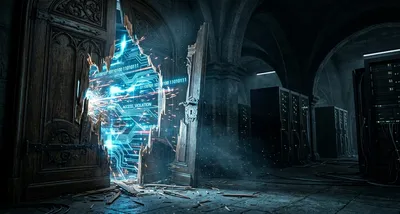
Image generated with AI
This article and its cover image were generated with artificial intelligence (AI).
Imagine you spend thousands of euros installing a high-end security system for your business. You have the best locks, the latest cameras, and a reinforced door. You feel safe, so you stop thinking about security altogether.
Then, one morning, you discover that the manufacturer of your locks accidentally left a “master key” hidden under the welcome mat—and that professional thieves have been using it to walk right into shops across the city for weeks.
This is exactly what happened recently with a piece of technology called Citrix NetScaler. For many business owners, this is the definition of “invisible infrastructure.” It is the gear that sits at the edge of your network, handling things like remote access for your employees or balancing the traffic to your website. Because it just works in the background, it is easy to forget it exists.
Until it becomes the way a hacker enters your system.
The risk: How network vulnerabilities open the door to hackers
The company Citrix recently issued a warning regarding its NetScaler products. They discovered several critical flaws that allowed attackers to perform what is known as remote code execution. In plain language: a stranger on the internet could send a specific command to your system and trick it into running their own malicious software.
The most worrying part is that these were “zero-day” vulnerabilities. This means the attackers found the holes before the software company did. There was no warning, no patch to install, and no way to defend yourself until the vulnerability was publicly acknowledged.
For a business owner, this is a nightmare scenario. Whether you run a logistics firm with a fleet of vans or a busy dental clinic, your network is the backbone of your operations. If an attacker gains control of your gateway—the “front door” to your network—they can potentially steal client data, lock your files for ransom, or shut down your operations entirely.
Why ‘install and forget’ IT puts your small business at risk
Many small businesses fall into the “install and forget” trap. You pay a technician to set up your server or your cloud gateway, and as long as the internet is running and the employees can log in, you assume everything is fine.
The problem is that technology is not a static product; it is a living thing. New threats are discovered every single day. A system that was perfectly secure on Monday can be wide open by Friday.
If you are not actively monitoring your infrastructure, you are essentially hoping that no one finds the “master key” to your locks. But as the Citrix situation shows, the people looking for those keys are professional, motivated, and fast.
What you should do now
If you use Citrix NetScaler or similar gateway technology to manage your remote work and network traffic, you cannot afford to be passive. Here is how to handle this:
1. Audit your network security and ‘invisible’ gear Ask your IT person or provider for a full list of the hardware and software that sits at the edge of your network. If you don’t know what you have, you can’t know if it’s broken.
2. Demand a patching schedule Updates are not just about getting new features; they are about closing security holes. Ensure that your systems are being updated the moment a critical patch is released. In the case of the recent Citrix flaws, the company released fixes that must be installed immediately to close the door.
3. Move toward active monitoring The goal is to move from “fixing things when they break” to “preventing things from breaking.” This means having a system in place that alerts you to vulnerabilities before they are exploited.
Common Questions
Do I need to worry if I don’t know what a “NetScaler” is? You might not use this specific product, but the lesson applies to everything. Whether it is your website’s hosting, your email server, or your office firewall, every piece of software has the potential for a “zero-day” flaw. The risk isn’t just one product; it’s the habit of ignoring the background technology.
Can’t I just trust my IT provider to handle this? You should, but you need to verify it. Ask them specifically: “How are we tracking zero-day vulnerabilities for our gateway and server infrastructure?” If the answer is “we wait for the update notification,” they are being reactive, not proactive.
Is it possible to be 100% secure? No. No one can promise that. However, there is a massive difference between a business that is a “soft target” (unpatched and unmonitored) and one that is a “hard target” (monitored and updated daily). Most attackers look for the easiest way in.
Stop guessing about your security
The Citrix incident is a reminder that the most dangerous vulnerabilities are the ones you cannot see. If you are relying on a “set it and forget it” approach to your IT, you are leaving your business’s front door unlocked.
At IT Move NL, we specialize in Security & Protection. We don’t just install software; we provide the continuous monitoring and patching services that keep those “invisible” doors closed. We track the vulnerabilities so you don’t have to spend your time reading security bulletins.
If you aren’t sure what is currently running on your network or whether your systems are up to date, let’s find out. Contact us for a security audit, and we will help you identify your own invisible vulnerabilities before someone else does.
Sources:

Reviewed by
David Velarde RoblesHe/Him · Content reviewer · AWS Certified Solutions Architect | Cloud Engineer @ Essent
Cloud Engineer at Essent B.V. with 10+ years of experience in the tech industry. AWS Certified, passionate about serverless architectures, Infrastructure as Code, and DevOps. Proficient in TypeScript, Python, and Terraform. Based in Amersfoort, Netherlands.
STAY IN THE LOOP
// Cloud, AI & DevOps insights — straight to your inbox.
No spam. Unsubscribe anytime.
// Related articles


Need help with your cloud infrastructure?
Our team of experts is ready to help you navigate the complexities of modern cloud architecture.
Get in Touch